
Thursday, May 31, 2012

Wednesday, March 07, 2012
when right is wrong (or when wrong is right) [a rant, no less]
Here's why:
Pat Robertson Blames Tornado Victims for Carnage
"God didn't send the tornadoes... God set up a world in which certain currents interfere and interact with other currents. If enough people were praying, He would intervene." ~ Pat Robertson
Those poor people should have just prayed harder.
But at least Robertson doesn't think that God caused these tornadoes as some form of punishment upon the American people. Unlike John Piper. Piper wrote that the recent tornadoes from March 2 & 3, 2012 were God's Fingerprints.
"Why would God reach down his hand and drag his fierce fingers across rural America killing at least 38 people with 90 tornadoes in 12 states, and leaving some small towns with scarcely a building standing, including churches?
If God has a quarrel with America, wouldn’t Washington, D.C., or Las Vegas, or Minneapolis, or Hollywood be a more likely place to show his displeasure?" ~ John Piper
Piper, whom many look to as a leader among all leaders, pulls scriptures from anywhere and everywhere to prove his point. Matthew Paul Turner has eloquently written about this on his blog: John Piper's Twister Theology.
To assume that any natural disaster, in this day and age, is God punishing us for our sins, is an awful big assumption. But you know what they say about people who assume, eh?
But Piper is not the first one to correlate disasters to God's punishment. Heck, a few years ago Piper blamed a tornado that ripped through Minneapolis on the Lutherans where convening and discussing (gasp) homosexuality. Robertson equated the Haiti earthquake to God's punishment upon them because Haiti made deal with the devil.
No wonder Christians are so easily mocked.
Many others (including Robertson) said Hurricane Katrina was also God punishing America. Jerry Fallwell said 9/11 was God's punishment upon us. Is that all God is? the puppet master? pulling all the strings up in heaven? And why is He so overly concerned with America? What about the rest of the world? I suppose he punished Japan last year with an earthquake and tsunami because of their self-absorption with Hello Kitty and Karaoke.
But maybe these tornadoes happened because a warm front and a cold front collided. Isn't that how tornadoes happen? Maybe Hurricane Katrina happened because of whatever it is that causes hurricanes.
On a side note: Rick Warren actually had to defend himself for sharing a meal and building relationships with (gasp) non-Christians! [RICK WARREN ON MUSLIMS, EVANGELISM and MISSIONS] Really? Sounds a lot like how the Pharisees shamed Jesus for making nice with tax collectors and sinners and the like.
Next up: Kirk Cameron. Last Friday (March 2, 2012) on Piers Morgan Tonight he said:
"homosexuality is "unnatural," "detrimental," and "ultimately destructive to so many of the foundations of civilization..."support him, his views or not, he had a right to say what he did. i'm not attacking that. his honesty has definitely brought support. But I'd say this: many things have been destructive to the foundations of civilization. Why do evangelicals bump homosexuality to the top of that list? What about society's general neglect for the poor, or greed, or pride or parents not being parents or divorce or our fascination with war and weapons and guns or selfishness? Many things have been destructive. Maybe if the anti-homosexuality crusaders put as much effort into seeing to it that the Greatest Commandments are lived out we'd really see change. It seems like evangelicals generally are quick to speak out against things... i guess i'd prefer us to be known more for what we stand for, not stand against. and perhaps these other concerns should be bumped to the top of evangelical talking points.
I'm not meaning to suggest that Cameron is a crusader against homosexuality. At least he handles himself with tact. But many are, including some of the current Presidential candidates.
It's one thing to have your morals, your faith-based standards, to live those out for the glory of God and to share why you live that way with anyone who'd listen. It's another thing to impose your set beliefs (no matter how right they might be) on others unwillingly. This is what many evangelical Republicans want to do. I don't see that as being the way of Jesus.
Lastly, Franklin Graham questioned President Obama's profession of Christian faith, calling him a (gasp) Muslim. Graham later backtracked and apologized. My struggle with how Obama is treated by Evangelicals is this: fairness. Shouldn't we, as Christians, above all else, be fair? It doesn't matter what you think of Obama or his policies. You don't have to like him - but you should be fair to him. And I don't see enough of that by evangelicals.
Frankly, that's the issue I have with all of these issues above. Evangelicals speaking for God - as if they are God and as if anyone has an opposing view point he will be labeled and defamed (apparently unworthy to be loved.)
I see this played out in the media and i see so many Christians taking the bait, hook, line and sinker. I'm sick of it. I don't know how so many Christians can support the likes of Rush Limbaugh or Sean Hannity... gentlemen who spew hate-speech... nothing short of hate speech. This should appall any and all evangelical Christians who give them the time of day.
What about the love?
The un-Christ-like behavior has got to stop. People need to put God before politics. Plain and simple. People need to read the Word. Plain and simple. Not just pick and choose the passages that work for them.
Lastly, if people want to see change in the world, they should do it by loving God and neighbor and by discipleship so that God might work through them and compel them to bring about change - not through the government - but through the heart.
POST:SCRIPT
some of the aforementioned talking points and similar stories like them have been the stick in my craw for some time now. writing this out was in many ways a complete waste of time and yet therapeutic. I think maybe i can move beyond this now. i realize that i am not exclusively correct with my perceptions... i may be way off base. you can be the judge. i am open to be wrong or to being proved wrong... but i think at this point i've always realized that it's not always about being right or wrong... it's about listening... i strive to listen more and to act more and to believe more and to imagine more and to live out the life God has given me, striving to honor Him and glorify Him.
POST:SCRIPT II
I aim to post more God-moments, God-reflections, God-interactions... that needs to be my focus.
Sunday, January 29, 2012
I'm a Christian, I'm a Christian
Every Sunday the pastor would stand at the front of his Church and with a booming voice finish his rousing sermon with a plea:
“Each week I go to a nearby town and serve the poor, the oppressed, and the downtrodden; what do you do? How do you show your compassion to those in need?”
People would applaud the minister’s closing remarks and every- one would wave him off at the end of the service as he hurried away in his little car.
The truth, however, was that each week he would go to a golf course and play a leisurely eighteen holes away from his congregation, family, and friends.
This deception had been going on for years, but eventually it came to the attention of some angels. They were furious at his lies and reported the situation directly to God.
After a little consideration, God said to the angels, “I will visit with this minister on Sunday and teach him a lesson he’ll never forget.”
Sure enough, next Sunday, God showed up at the Church. Yet again, the minister informed his congregation that he was going to go serve the poor before leaving for the golf course.
This time however, God intervened. When the minister took his first shot, the ball took off, flew through the air, bounced onto the green, and dropped into the hole.
The minister was amazed. At the second hole the same thing happened. And the third. And the fourth. Right through to the last hole.
With his last stroke, the minister sliced the ball badly, but still it curved around and, like all the others, found the hole in one.
All the while the angels in heaven watched what took place in utter disbelief. By the time God returned they shouted, “I thought you were going to punish the minister for all his lies, but instead you gave him the perfect round of golf!”
“That may be true,” replied God with a smile, “but ask yourself this: Who is he going to tell?”
 Peter Rollins is a writer, lecturer, storyteller and public speaker. He is also the founder of Ikon, a creativity-laden faith group that has gained an international reputation for blending live music, visual imagery, soundscapes, theatre, ritual and reflection to create what they call ‘transformance art.’ Insurrection is his fourth book.
Wednesday, January 11, 2012
Tuesday, October 04, 2011
calling
[rundown from a youth worship service i designed - october second]
What is your calling in life?
MOVE. EAT. LEARN.
below are three great videos from Rick Mereki - an Australian film maker. these short 1 minute films were used for an Australian travel agency. but they are brilliant and creative. i used them as part of a youth worship service on 'Understanding Your Calling' (becoming the person God called you to be).
http://vimeo.com/27246366
how can we know our calling if we stand still?
http://vimeo.com/27243869
embracing + consuming the life God gives you is part of your calling.
http://vimeo.com/27244727
willingness to learn new things will help you connect with God's purpose for your life.
i also tied in the Bethany Hamilton story from I Am Second.
you don't have to be perfect in order for God to use you - in order to fulfill your calling, etc.
scripture references: 1 Peter 2:4-10 (the message); the story of Josiah; Revelation 2:17
also used insight for designing this service from Grace - a fresh faith fellowship in London (titled The Becoming, Sept 2011) [i adapted it for youth]
and from Jonny Baker (you've arrived / you've not arrived)
~Tim
Saturday, September 10, 2011
thoughts on 9/11
~Will Willimon, presiding bishop of the North Alabama Conference of the United Methodist ChurchOn 9/11 I thought, For the most powerful, militarized nation in the world also to think of itself as an innocent victim is deadly. It was a rare prophetic moment for me, considering Presidents Bush and Obama have spent billions asking the military to rectify the crime of a small band of lawless individuals, destroying a couple of nations who had little to do with it, in the costliest, longest series of wars in the history of the United States.
The silence of most Christians and the giddy enthusiasm of a few, as well as the ubiquity of flags and patriotic extravaganzas in allegedly evangelical churches, says to me that American Christians may look back upon our response to 9/11 as our greatest Christological defeat. It was shattering to admit that we had lost the theological means to distinguish between the United States and the kingdom of God. The criminals who perpetrated 9/11 and the flag-waving boosters of our almost exclusively martial response were of one mind: that the nonviolent way of Jesus is stupid. All of us preachers share the shame; when our people felt very vulnerable, they reached for the flag, not the Cross.
September 11 has changed me. I’m going to preach as never before about Christ crucified as the answer to the question of what’s wrong with the world. I have also resolved to relentlessly reiterate from the pulpit that the worst day in history was not a Tuesday in New York, but a Friday in Jerusalem when a consortium of clergy and politicians colluded to run the world on our own terms by crucifying God’s own Son.
as quote in Christianity Today - from the article How Evangelical Leaders Have Changed Since 9/11 found here and here.
Thursday, April 28, 2011
God is Doing a New Thing. Are We?
 God is Doing a New Thing. Are We?
by Tim Beck
New Church Start Team, East Ohio Conference
(originally published in the WINDOW bi-monthly newsletter May-June '11)
One of the most chilling paintings I‟ve laid eyes on was painted by Vincent Van Gogh, the famous 19th Century Dutch post-impressionist painter. The title of the painting is The Church at Auvers and it was painted by memory in 1890, shortly before his untimely death. The painting depicts a church north of Paris. What is haunting about Van Gogh‟s interpretation is that the foreground is lush with green grass and signs of life, but the church is cast in the midst of a dark, looming shadow. The windows are dark and closed and there is no visible door. In his own words, Van Gogh described the church as follows: “it neither reflects nor emanates any light of its own.”
Sadly, this impression of the church is not exclusive to Van Gogh. For many, churches are more haunting than wel- coming; more closed than open; more dark than light. It‟s not that we (the church) don‟t have good intentions. It‟s not that we (the church) intend to shun, but the harsh reality is this: people in America feel less connected with the church building and the church body. We know this because by-and-large mainline denominations have witnessed a steady decline in attendance and membership over the past 10 plus years. The United Methodist Church has had a 7% drop in membership since 2001. That‟s 600,000 people who have left.
This is haunting. But it‟s also nothing we didn‟t already know.
This begs the question: what can we do to reverse such a pattern? I realize I‟m hardly the first person to point out the obvious nor am I the first to ask such a question. None the less, it‟s worth exploring, examining and engaging.
Let‟s face it, while the lights might be on inside the church; while worship and study might be taking place inside the walls, darkness might be perceived to be shadowing the church. We might not see it that way - but to those who have no desire to enter in, how do we suppose they see it? How do we suppose they see us? Kester Brewin, the English author, teacher and church planter refers to those not connected to a faith community as the „Other‟. To the „other‟, church is the same as it always was. Why should they bother?
Maybe what we‟re offering isn‟t fresh enough. Perhaps we‟re missing out on the new things God has in store for us (the church). If we hope for the Gospel to reach the world around us then we have to be concerned with how we are perceived, no matter if the world‟s view is right or wrong. We need a fresh church, a new church. Remember the words of Isaiah “See, I am doing a new thing! Now it springs up; do you not perceive it? I am making a way...” (Isaiah 43:19). God is doing a new thing, but is the church?
Am I suggesting that we change the Gospel? Absolutely not. I am, however, suggesting that our approach to the ministry of the Gospel might need to be „freshened up.‟ If we the church can tap into a fresh approach, perhaps our shadowed perception might fade away and the light of Christ would shine through.
In what ways could you and your church "freshen up‟?
Monday, April 25, 2011
Book Review: The Story of God, the Story of Us
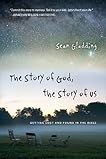 The Story of God, the Story of Us: Getting Lost & Found in the Bible by Sean Gladding
My rating: 5 of 5 stars
the Story of God, the Story of Us is really a magnificent telling of a magnificent story. it's storytelling at its best. plain and simple. Sean Gladding has taken the meta-narrative found in the Scriptures and has written that story within the context and probability of how that story was once told, shared and remembered.
the imagery found in this book really is compelling. the Old Testament stories, the stories of God's chosen, the Israelites, their plight, their exodus, their worship and their wandering, told by an old man sitting 'round the campfire was a beautiful image. i connected with this old man reminding the people how and why God has been with them - even while in Exile. in my life, i've generally been drawn to the New Testament stories of Jesus and the church. Gladding helped me connect the dots of the Old Testament. for that, i am grateful.
the NT stories of Jesus are just as compelling. Gladding is a great storyteller. while reading, it was easy to insert myself into the story.
even though it took me months to read, this book was easy on the eyes. i took my time with it... casually reading here and there. every them i picked it up, i was drawn in.
if you want a new, fresh perspective of the story of the Bible - read this book.
View all my reviews
Thursday, December 30, 2010
Book Review: Jesus Died for This?
 Jesus Died for This?: A Satirist's Search for the Risen Christ by Becky Garrison
My rating: 4 of 5 stars
Becky Garrison writes from the heart. she 'calls it like she sees it.' this is a book that is raw. i appreciated the tone that Garrison writes in. I connected with her sarcastic/satirical musings - as i, often feel the way she writes... only she is bold enough to lay it all out there - exposed... for all to see and read.
her musings on the current state of the 'church' (and all of the baggage that comes with that) are poignant and amusing. i appreciated that despite her skeptic bent, she attempted to be fair - acknowledging when God was active and present - even if in ways that she either didn't connect with or fully grasp.
Jesus Died For This is an honest book. we don't seem to get many people speaking as candid as she - so kudos to her for that!
it's an enjoyable read... worth my time... and yours.
the church is screwed up. most church's within empire building nations are probably missing the point (perhaps not intentionally) but Garrison brings to light some groups and communities that truly are uniquely 'church'... communities doing all that they can to BE Christ - with no conditions.
View all my reviews
Wednesday, May 26, 2010
expectation vs. realization.
In many respects the Old Testament is a very unsatisfactory book. Nothing is actually solved in it. As someone has put it: The Old Testament is expectation; the New Testament is realization.
~J. Vernon McGee (from his commentary on the book of Job)
expectation vs. realization.
i expect a lot. i realize too little.
have you ever felt like you've been wandering around only to realize what you were looking for was right in front of you the whole time?
i expect God to work in my life. sadly, i don't always realize it.
eyes open.
Wednesday, May 19, 2010
Natural Selection: Why the Church Must Adapt or Die
Of people born from 1981 on, some 26 percent claim no religious affiliation. Among people born between 1965 and 1980, the percentage of non-believers is a lower 20 percent. Heading farther back, those born from 1946 to 1964 are only 13-percent non-religious.i've heard a lot of chatter lately about going back. "i want my America back!" frankly, most go beyond chatter - yelling might be a better word. in the world of American Christiandom, the conversation often steers towards the proverbial 'we need to go back to America's roots as a Christian nation.' i think those who say that might very well have good intentions. after all, the past always seems better as time goes by, does it not? nostalgia has a funny way of almost distorting the actuality of past events.
A doubling, that is, between the boomers and the most recent generation. As you know, doubling is a geometric function. If the number of non-believers doubles again in 50 years, then by around 2050, the United States will be a majority non-religious country. Clearly, if Christianity seeks to not only stay relevant but viable, it must adapt. The proof is in the numbers; Christianity is suffering. ~Alex Wilhelm (from his article Why Christianity Must Adapt... or Perish)
don't get me wrong, i have some fond memories of the past. and there are times that i'd go back to being 12 years old in a heartbeat. as Richard Dreyfuss most eloquently put it (a la Stephen King) in the movie Stand By Me "I never had friends later on in life like I did when I was 12. God, does anyone?"
be that as it may - going back doesn't always mean things would be better than they are right now... or in the future.
from a political stand point - what exactly do 'we' want to go back to? war? slavery? no civil rights? oppression of woman? with all the good that came about when our sweet nation began governing - there were certainly a number of flaws.
we've made progress over the years. we'd all agree with that. so why go back? why not go forward?
i often here this same argument in the church. if you took a magnifying glass and looked at the way many churches function, you see many institutions stuck in the past. recreating what has already been done is not progress. there is nothing progressive about it. but progressiveness and post-modernism are scary things for the church these days.
and so the argument goes like this: "why can't we go back to our roots of our nation, with Christianity at the center?" in a perfect world - we'd be a nation of people seeking after the heart of God - not after our own selfish wants and desires. in a perfect world, we'd care about other people and other nations as we do ourselves, too. but we live not in that world.
should or could that be a goal for the 21st century church? yes. absolutely. but that will never happen by wishing and hoping to 'go back.' save your breath. save your energy. 'going back' will not bring non-religious, non-Christ like or nominal Christians either back to church or closer to God.
going forward will. like the statistic says above: less and less people in America are claiming any religious affiliation at all. Natural selection is in full effect: we must adapt or die. it's survival of the fittest and the church is that sloth lounging on the couch in front of the television.
so what are the steps deemed necessary to bring about adaptation?
(my humble opine follows)
1. The church and/or Christians must stop their obsession with proving how wrong everyone is and how right 'we' are. frankly, we've got Plank Eye Syndrome. We concern ourselves so much with the sins and imperfections of others that we neglect to see the sins of our own. (Jesus talked about that in Matthew chapter 7 verses 3 through 5) Following Jesus is not about being right - it's about obeying. it's about loving. it's about empathizing and caring... with no conditions.
2. Strive to become 'quick to listen, slow to speak and slow to become angry. (James 1:19) We like to talk a lot. but how well do we listen? Are we listening to the heartache and cries of our communities? Are we seeing their true needs? or are we telling them what we think they need? telling a man he 'needs Jesus' doesn't put food on his table. am i suggesting we squelch our desires to share the gosepel? not at all. i am suggesting though, before we speak it - we live it. We show Jesus to the world through our acts of compassion and love. Actions do speak louder than words.
3. Realize that church does not exclusively exist for 'us' - but for those not part of the Christ-centered community. we do things we like and expect others to just show up. 50 years ago - the fact that churches had doors and a steeple and a bell that rang on Sunday mornings compelled people to come. Many churches still hold to that same expectation. Understand this: in the 21st century people will not walk through the church doors simply because the church doors are open at 9am every Sunday morning. I believe the church doors should be open... but perhaps they should be open so that we would 'go out' rather than wait or expect others to 'come in.'
4. Learn to deal with conflict differently. i recently read about how metaphors rule our lives. i've never thought about that before - but when it comes to conflict or disagreement - we often think of it as a battle or a war. "Argument is War" When disagrement comes or when arguments arise - our passion gets the blood boiling. We aim to 'defeat' our opponent. we want to destroy their message. We aim to 'defend' our point of view. We want to 'WIN!' But what if our arguments and disagrements were not viewed as war - but as a dance.
Robert Schnase, a Methodist bishop so eloguently wrote about this in his book The Balancing Act (with inspiration from Metaphors We Live By.) In a dance - both performers play essential and important roles - but one is not out to 'take down' the other. IF our disagrements within the church and with the world were not combative - but more like a graceful dance, think of how more productive we might be or could be?
Both dance parties compel the others movement - "pushing each other along - closer to the truth. We might 'focus on where we need to go and whether we are farther along than the last time we talked. Rather than winning or losing we might say things like 'He really pushed you forward with that idea. er suggestion took us a step higher. We made real progress. I feel like we're getting closer and closer.'"
When conflict and disagreement comes - if we expect a war, then a war we will get. If we expect a dance, something more graceful might arise. Which one is a more Christ-like approach?
5. Act like disciples. Dallas Willard, author, pastor and theologian said this: “Generally, what I find is that the ordinary people who come to church are basically running their lives on their own, utilizing ‘the arm of the flesh’—their natural abilities—to negotiate their way. They believe there is a God and they need to check in with him. But they don’t have any sense that he is an active agent in their lives. As a result, they don’t become disciples of Jesus.”*
One's faith is meant to be active - not passive. the church needs disciples who are disciplined and dedicated to Jesus first.
lastly,
6. Separate Politics from Church. yeah - i have high expectations if i think this will ever happen - but it doesn't mean it couldn't. imagine. imagine if Christians in America made their decisions based on Christ Jesus first, political party of choice second. Imagine. Imagine what the world would look like if we truly lived the Greatest commandment: Love God. Love People. (Matthew 22:37-40). Jesus said EVERYTHING hangs on these two commands!
Jesus is not a politician. And he need not be a second fiddle to any candidate, movement or call for political action.
this list could go on. and frankly - i could be wrong. but this is what i am thinking... right now.
i love the church and am hopeful that it might become viable and authentic and humble and loving - beyond what we may ever comprehend. but we need to adapt... or we will die. the church will die. yeah, there will probably still be churches on every corner - but will they be alive? full of life? full of love? full of Jesus' active messages of truth? a building does not a church make. loving, intentional, selfless disciples do.
just my 2 cents. for what it's worth.
Thursday, April 29, 2010
ramblings of randomness 2: electric boogaloo
so i was reading in Leviticus this morning. what a way to start the day! and i stumbled upon this verse:
33-34 "When a foreigner lives with you in your land, don't take advantage of him. Treat the foreigner the same as a native. Love him like one of your own. Remember that you were once foreigners in Egypt. I am God, your God.and in case you find the Message translation to be too much of a paraphrase...
~ Leviticus 19:33-34 (the Message)
34 The alien living with you must be treated as one of your native-born. Love him as yourself, for you were aliens in Egypt. I am the LORD your God.
~ Leviticus 19:33-34 (NIV)
i find this verse very interesting in light of the new law in Arizona to rid its self of illegal immigrants. Arizona Senate Bill 1070 states that any Hispanic can be stopped and detained unless they carry the proper paperwork proving their citizenship. So this is what we've come to. I dare say that Arizona is out of control. Jon Stewart referred to them as "the meth lab of democracy."
This new bill is the toughest of its kind.
So in light of all of this - and putting politics aside: what should the Christian, no,Christ-like or Godly response be?
--
actually, speaking of politics, I wonder how Christians might act, think, behave or believe different if we looked to the example of Christ first rather than our political party of choice.
what if we made great effort to 'love' first? how would our country and our world be different?
we would probably care for others more. there would be no debate on health care. we would find a way to get sick people well. there would be no poverty. we would find a way to get people fed and clothed and housed. we would probably care for the earth more. if nothing else, we would take care of it. we'd recycle, etc. wanting to take care of the earth doesn't make one an environmentalist (in the radical sense, anyway). it makes one human. was not Adam instructed to take care of the land? [Genesis 3] We'd listen more. there would be less arguing and bickering. public servants called to public service would follow the needs of the public first not greedy temptations.
some of our current systems may be flawed - but would they be if we acted Christ-like first? think of how productive we could be?
--
if you do a Google image search in order to find pictures of 'Jesus' this image of Jesus holding a rifle will no doubt show up. really? a rifle? people have a keen knack of distorting scripture to say what they want it to say.

So what did Jesus mean when he said "blessed are the peace makers"; "love your neighbor as your self", "love your enemies"; "pray for those who persecute you"; "turn the other cheek"; "give to those in need", etc.
I don't remember him saying "Annie get your gun!"
yeah, i know, the 2nd Amendment gives Americans the right to bear arms. fine. but don't insert Jesus into your own desires. Bear your arms if you like. i pray you never have to use it. Life would be different if this guy hadn't been packing heat.
Monday, October 19, 2009
religiosity. pt. 2
Boston Globe: I’m struck by the fact that I don’t hear a lot of explicitly religious language, or mentions of Jesus, from you.
Rob Bell: I think we have enough religious people who are going around trying to convert people. My guard is up when somebody is trying to convert me to their thing. Are you talking to me because you actually are interested in this subject, because you care about me as a human, or am I one more possible conversion that will make you feel good about your religiosity? I don’t have any embarrassment about my religion, and it’s not that I’m too cool, but I would hope that the Jesus message would come through, hopefully through a full humanity.
my thoughts:
Christianity can't fit into a cookie cutter mold. yet we try and try to make it fit, perhaps because it makes us feel successful. but perhaps its not about success. perhaps its truly about discipleship and truly following Jesus.
there is a ministry at the edge of town that has a sign out front that reads '652 Salvation's' or something like that. everytime i see it i am reminded of McDonalds and how it would say 'over 1 billion served'. I don't like to think of 'salvation' as a fast food product that is bought and sold.
i know that God can and will reach people and save people through various methods - but i would feel a little uncomfortable using the 'used car salesman' approach to advancing God's kingdom.
i think i would rather spread the Good news of Jesus through relationships and conversations and actions that are consistent with the teachings of Jesus. Loving God first and Living all people next. Treating people with respect while showing them an example of the hope that is within me.
Salvation is not a commodity - and getting people 'saved' is not something i do so that i can get another notch on my belt.
i guess i look at it this way: if a man were drowning in a lake - and he cried out to be saved, the lifeguard would throw him a life preserver and thus salvation would be at hand.
but once out of the water - drowning man must then learn to swim before jumping back in the lake. the learning to swim is discipleship. learning the art of being like Jesus. the lifeguard - presumably would show drowning man the Way to life. (John 10:10)
if said life guard 'saves' drowning man but then moves on, how genuine was the saving? he saved only because it was his job - not because it was his passion for the drowning man to have life.
as a follower of Jesus - i want people to understand the saving grace of Jesus. but i want them to understand that and to SEE that through my love and my actions.
it is my prayer that there would be a genuine, consistency within me and that God would give me the boldness to proclaim the gospel to one and all - through word and deed. i hope that is your prayer, too.
Wednesday, September 30, 2009
carried through
One day, i was playing and decided "wouldn't it be cool if Choo Choo Charlie got into some sort of train accident? So i found in my sisters room some lipstick and i smeared it all over Choo Choo's face and arms - so as to resemble blood, i guess. (disturbing, I know). When i was done playing 'train accident' i discovered that said lipstick would not come off. His fur was permanently scarred. the bear was damaged goods.
But i didn't mind. despite his flaws, i loved that bear. over time it became even more flawed... ripped clothes, frayed fur, etc. by any stretch - it was broken; certainly less than perfect. but regardless, i still loved that bear. Why? because there was a bond. a connection. a shared comfort. i carried him proudly.
it was a part of me.
i think it's kind of the same with God. we have our cuts and bruises. some manufactured by us. some caused by others. but despite our flaws - our ripped souls and broken hearts - we are still loved by God. Why? because there is a bond. a connection. a shared comfort. God delights in us. believe that. we are his pride and joy.
and he carries us proudly.
When the water's too high
When the water's too high
I will carry you
I will carry you
When the night is too black
When the night is too black
I will carry you
I will carry you
Save Me O' God
Thursday, July 02, 2009
MAKER MOMENT: the meaning of life

it is our task to create foretastes of the kingdom of God on this planet -- living glimpses of what life is meant to be, which included art and music and poetry and shared laughter and picnics and politics and moral outrage and special privileges for children only and wonder and humor and endless love.
~ Robert McAfee Brown
[c]
Wednesday, February 04, 2009
The Christian Culture Survival Guide: The Misadventures of an Outsider on the Inside [REVIEW]
 The Christian Culture Survival Guide: The Misadventures of an Outsider on the Inside by Matthew Paul Turner
My review
rating: 4 of 5 stars
The cover drew me in from the start. Turner hits the nail on the head. with tongue firmly planted in cheek he calls out the church and it's followers. if you can't take a joke you shouldn't read this book.
although some of the chapters neglected to come to any resolution, in my opinion, the book was entertaining and somewhat inspirational in that i know without a shadow of a doubt of whom i desire NOT to be.
too many in the church follow the church instead of Jesus.
Turner call's them out - but in a nonsensical, fun & humorous way. too bad most of the people he is talking about wouldn't get his 'jokes' anyway.
p.s. the church... and christians... we need to change. no wonder the world thinks we're fools. because we are.
View all my reviews.